Horror

All posts tagged Horror

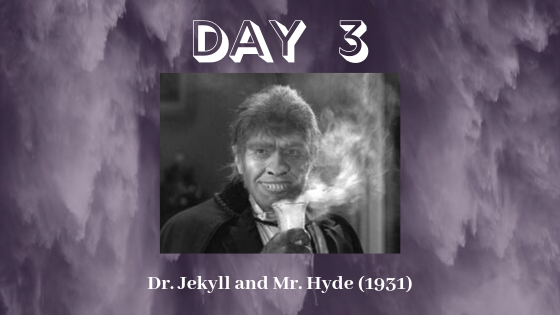
DAY 3 OF 31: DR. JEKYLL AND MR. HYDE (1931)

Published October 3, 2022 by Philip Ivory


One of the most frequently filmed of all stories, Robert Louis Stevenson’s novella The Strange Case of Dr. Jekyll and Mr. Hyde was one of a number of Victorian tales dealing with man’s dual nature (Oscar Wilde’s The Picture of Dorian Gray is another.)

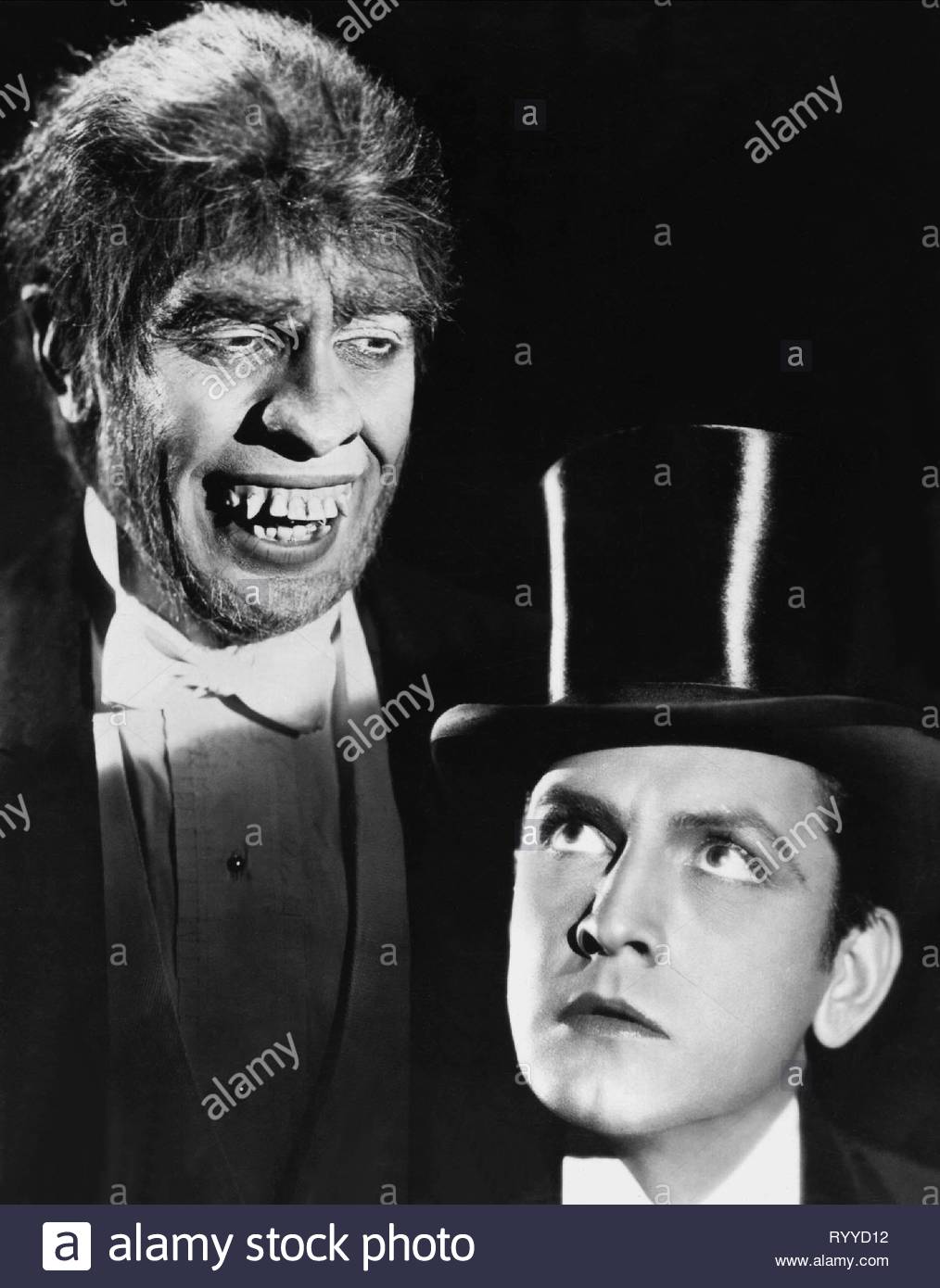
Stevenson’s story of a scientist who concocts a drug that unleashes an evil alter ego version of himself found its greatest cinematic expression in the 1931 Paramount version directed by Rouben Mamoulian and starring Fredric March in the dual role.

Mamoulian adds some arty touches that might have seemed a little too high brow at Universal, where most of the monster classics were being churned out in the early 30s. DR. JEKYLL AND MR. HYDE begins with a subjective camera sequence that makes us feel we are Dr. Jekyll, and includes symbolic shots of various statues, as well as closeups of roiling flames, which either suggest man’s primitive urgings or the fate awaiting Jekyll’s soul for his trespasses against God — take your pick.

The director changed the emphasis from a conflict between good and evil to a conflict between civilized man and man in his primitive state, explaining Hyde’s vaguely Neanderthal appearance.

Much of the film plays upon civilized man’s repressed sexuality. Jekyll, passionately in love with Muriel played by Rose Hobart, argues with her father who stands in the way of their marriage. In the following scene, Jekyll pays a house call on a bar singer named Ivy, played by Miriam Hopkins. (The film suggests, without saying outright, that she is also a prostitute.) He seems to be tormented by her overt sexuality, and in a famous scene she sways her gartered leg back and forth while calling on Jekyll to come back to her, an image that will play itself over in his mind.
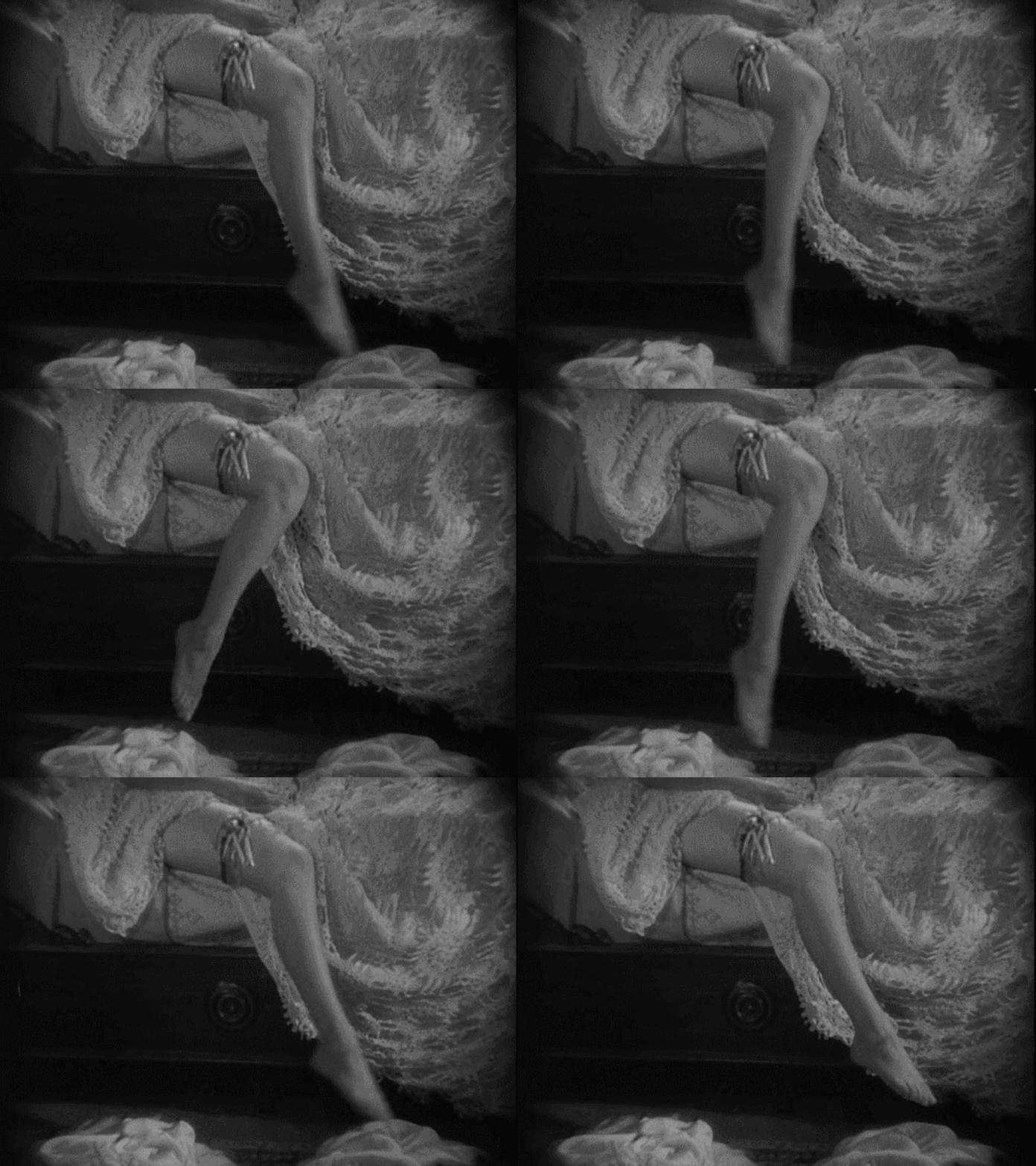
Is it any wonder that in the following scene, Jekyll takes the potion that for the first time transforms him into Hyde, a figure who’s free to pursue the pleasures that the upright Jekyll denies himself?  “Free at last!” Hyde proclaims, staring at his grotesque visage in the mirror.

HIGH POINTS

The film utilizes a plot device, not present in the book, of having Jekyll cross the paths of a so-called virtuous woman (Muriel) and a “bad girl” (Ivy).  It’s a structural element that would be repeated in subsequent versions.

Hopkins as Ivy simmers with Pre Code sexuality, adding a real edge to the film. She draws Jekyll’s lust. Tragically, she also attracts Hyde’s abuse. March is at his most terrifying as he torments Ivy, psychologically and physically. In desperation, she seeks out the good Dr. Jekyll for help who promises, in vain, that Hyde will not return. Of course Hyde does. Enraged at her for going to Jekyll, he murders Ivy, asking as he strangles her: “Isn’t Hyde a lover after your own heart?”
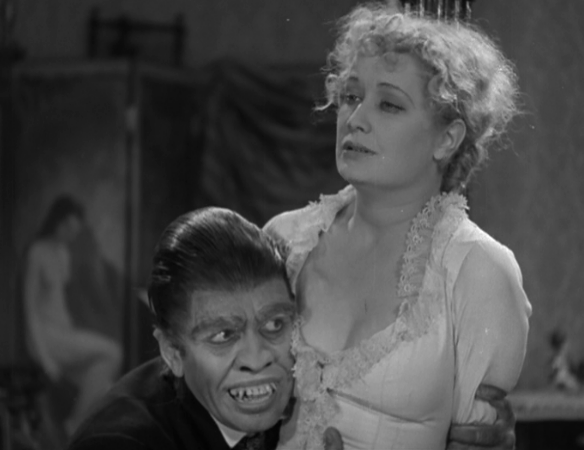
Fredric March’s Hyde torments Miriam Hopkins as Ivy.

Miriam Hopkins’ performance is unabashedly sexual and heartbreakingly real. Film historian Greg Mank argues that, alongside March, she deserved an Oscar for her work on the film.

The transformations scenes are remarkable, surpassing the much cruder scenes later used by Universal for its Wolfman films. In addition to lap dissolve and other techniques, Mamoulian’s film employs the gradual removal of colored filters to reveal layers of makeup, achieving an organic metamorphosis that happens within a continuous shot. How this was achieved was kept secret by Mamoulian for decades after the film’s release.

March gives an outstanding performance. His Hyde is so bestial, so different from the civilized Jekyll, that we almost forget both parts are played by the same actor. (something that almost never happens in other film versions.)

DIALOGUE

HYDE: “Do you want to be left as you are, or do you want your eyes and your soul to be blasted by a sight that would stagger the devil himself?”

HYDE: “If you do one thing I don’t approve of while I’m gone, the LEAST little thing, mind you… I’ll show you what horror means”

 INTERESTING FACTS

  • This classic film was almost lost forever. A decade after its release, MGM remade the story with Spencer Tracy, suppressing the earlier version and destroying prints so as to allow the new version to stand alone. Luckily, prints showed up years later and the film was saved from obscurity.
  • Fredric March won an Oscar for his performance, the first monster performer ever to do so. (And the last, unless you count Anthony Hopkins’ turn as Hannibal Lector in SILENCE OF THE LAMBS. )
  • The Hyde makeup becomes progressively more savage as the story unfolds, perhaps an idea inspired by Wilde’s Dorian Gray, in which Gray’s’ brutal actions manifest themselves over time in the face in his portrait. Historian Mank reports that the final makeup was so punishing that March spent several weeks in the hospital after the film finished and there were fears, fortunately unfounded, that March would be permanently disfigured.

UP NEXT:

“He went for a little walk! You should have seen his face!”


DAY 2 OF 31: FRANKENSTEIN (1931)

Published October 2, 2022 by Philip Ivory


After Universal Studio’s success with DRACULA in early 1931, what could be more natural for a followup than to turn to Mary Shelley’s 1818 classic? 

The novel is about a young Swiss scientist who bestows life upon a body he created by appropriating parts from rifled graves and other sources, only to have his creation turn against him and destroy all the scientist holds dear. A couple of silent film adaptations had been done, most notably one produced by Thomas Edison in 1910.

That Universal’s blood and thunder sound version of ’31 was released in November of seems appropriate, since that is the month of the monster’s creation in the novel:

“It was  on a dreary night of November that I beheld the accomplishment of my toils. With an anxiety that almost amounted to agony, collected the instruments of life around me, that I might infuse a spark of being into the lifeless thing that lay at my feet. It was already one in the morning; the rain pattered dismally against the panes, and my candle was nearly burnt out, when, by the glimmer of the half-extinguished light, I saw the dull yellow eye of the creature open; it breathed hard, and a convulsive motion agitated its limbs.”

But what would the filmic monster look like? How would he be brought to life? (Shelley’s narrative provides few details on the procedure.) Director James Whale and electrical effects artist Kenneth Strickfaden contrived to stage an exciting creation sequence, with the table-bound monster being raised to the roof to receive the lightning’s gift of the mysterious life-giving ray that the scientist has discovered. The sequence is a cinematic triumph, its dazzling pyrotechnics effectively “selling” us on the unholy miracle of the monster’s birth.

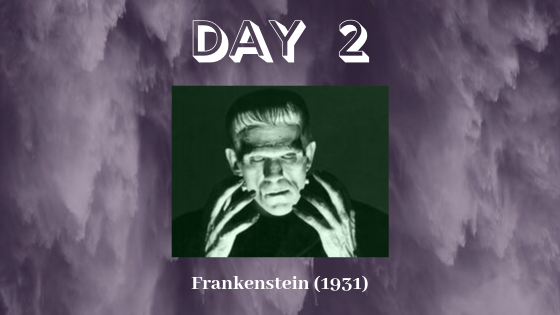
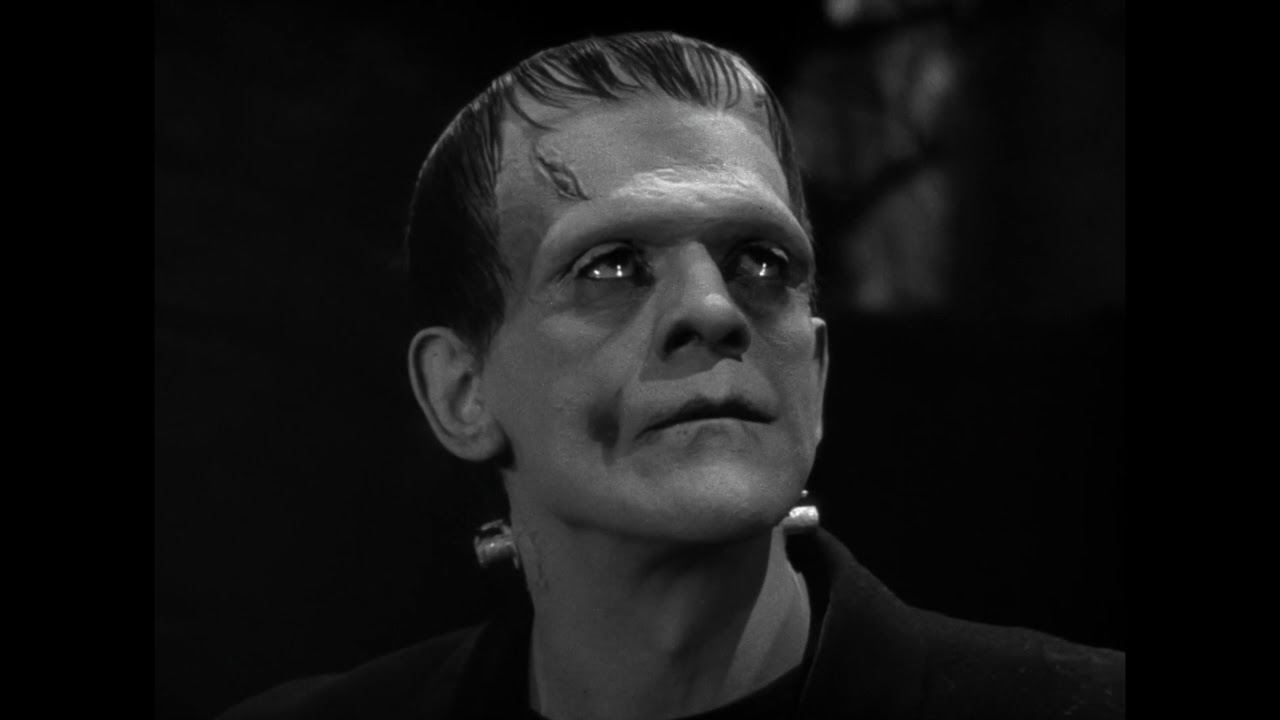
Meanwhile, makeup artist Jack Pierce, also in consultation with director Whale, created a monster visage that audiences would fear and pity for generations to come. The genius of the makeup was to allow as much as possible for an actor’s expressive face to remain exposed. Struggling actor Boris Karloff won the role of the monster, partly on the basis of the unusual bone structure in his face and his large liquid eyes.

“Karloff’s eyes mirrored the suffering we needed,” said Universal exec Carl Laemmle.

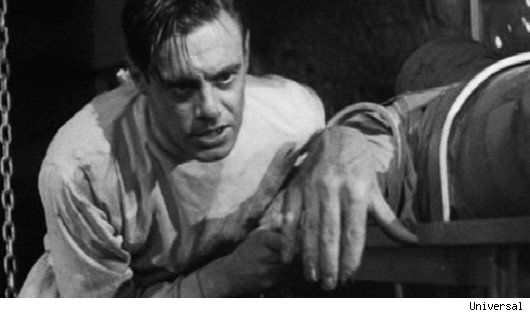
Colin Clive, an actor who specialized in sensitive, high-strung roles, was a perfect fit for the scientist, Henry Frankenstein. (The name is inexplicably changed from the novel’s “Victor.”) His frenzied performance in the creation scene, accompanied by terrifying peals of thunder and an orgy of electrical sparks and buzzes, is unforgettable. (Note: as in DRACULA and other examples of early sound cinema, there is no musical score. These films breathe with eerie stretches of silence, helped by sound effects.)

“It’s moving! It’s alive!”

HIGH POINTS

The creation scene remains a knockout to this day, as does the haunting vignette in which Karloff’s newly born creation reaches above his head for the light descending  from a skylight as if he could grip it in his hands.

Karloff’s monster, quick, agile, clearly not sound of mind, immensely strong and unpredictable, with heavily lidded dead man’s eyes, is instantly frightening, making us feel we are looking upon a thing that should not be alive, but unaccountably is.

And yet the creature is immensely sympathetic, an unwanted child abandoned by his only parent, hated and feared by everyone else based on his grotesque appearance. In his ill fitting black, funereal suit , he carries with him the aura of the grave, evoking a universal dread. With his spasmodic movements, shuffling gate and pathetic, pleading hand gestures, he is one of horror’s supreme characterizations, simultaneously frightening and poignant. Other actors, including Christopher Lee, Michael Sarrazin, and Robert DeNiro have made sincere attempts to portray the monster. With respect, no one even comes close.

The film is a tragedy. Frankenstein, reduced to a nervous wreck by the shattering of his great dream, becomes  a shell of the confident visionary we see in the early scenes. The monster is hounded to a horrifying death, caught in the inferno of a blazing mill.

Clive and Karloff are ably assisted by two holdovers from DRACULA, Edward Van Sloan as Professor Waldman and Dwight Frye as Frankenstein’s hunchback assistant, Fritz. Also helping out are Mae Clarke as Frankenstein’s fiance, Elizabeth, John Boles as his friend, Victor, and Frederick Kerr as his father, the harrumphing old Baron.

The monster of course remains mute throughout the film. Most of the best dialogue belongs to the scientist:

(caressing the coffin of a stolen body) “He’s Just Resting, Waiting For A New Life To Come.”

“The brain you stole, Fritz. Think of it. The brain of a dead man waiting to live again in a body I made with my own hands!”

“Have you never wanted to do anything that was dangerous? Where should we be if no one tried to find out what lies beyond? Have your never wanted to look beyond the clouds and the stars, or to know what causes the trees to bud? And what changes the darkness into light? But if you talk like that, people call you crazy. Well, if I could discover just one of these things, what eternity is, for example, I wouldn’t care if they did think I was crazy.

DEFICITS

FRANKENSTEIN might not seem shocking today. Its monster makeup and Gothic trappings have been absorbed into the culture, its iconography made comfortable by parodies, pop songs and use in Saturday morning cartoons and breakfast cereals. But Whale’s Gothic extravaganza was considered unfamiliar, strong meat when first issued, with its corpse like monster, graveyard scenes, multiple murders and grim, fairy tale like setting.

Some cuts made at the preview stage, designed to protect delicate sensibilities, hurt the film for decades. For many of us who grew up watching it on television, the fabulous creation scene was marred by a jump cut at its climax, where a crucial but potentially blasphemous bit of the scientist’s dialogue — “Oh, in the name of God, now I know what it feels like to be God!” — was crudely excised. (Hey, it only expressed a major theme of the film.)

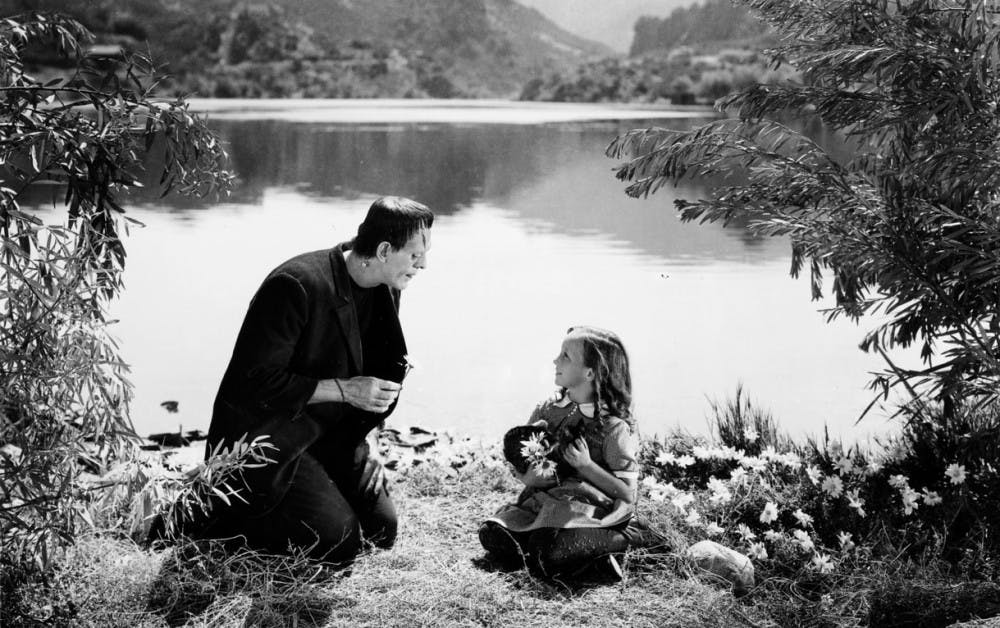
Similarly, the famous (or infamous) scene in which Karloff’s monster befriends a little girl, but ends up unintentionally drowning her, was truncated, cutting abruptly as Karloff reaches for her, which allowed for even worse implications than what was intended.  The scene, fully restored a few decades ago along with Clive’s censored line and a few other bits and pieces, remains a touching, heartbreaking episode in the monster’s lonely existence, one tranquil moment of friendship and peace before tragedy and horror reassert themselves.

Despite one or two stuffy performances, including some weak comic relief from the Baron, and a few bits of unexplained plot construction (How does the monster know where Frankenstein lives?), the film remains a powerful experience, maybe not as shocking as it once was, but largely undiminished in its impact.

INTERESTING FACTS

  • Karloff suffered severe back pains the rest of his life that may have resulted from the rigors of his performance, particularly the scenes in which he has to carry Clive on his back through the mountainous countryside.
  • DRACULA star Bela Lugosi was originally assigned the monster role, even trying out his own makeup, before Karloff was (wisely) brought in.
  • Karloff, protective of the monster, played him in two sequels but stopped when he thought the character was being cheapened. He called the monster “my best friend.”

UP NEXT:

“My analysis of this soul , the human psyche, leads me to believe that man is not truly one – but, truly two. One of him strives for the nobilities of life. This we call his good self. The other, seeks an expression of impulses that bind him to some dim animal relation with the earth.”


DAY 1 OF 31: DRACULA (1931)

Published October 1, 2022 by Philip Ivory


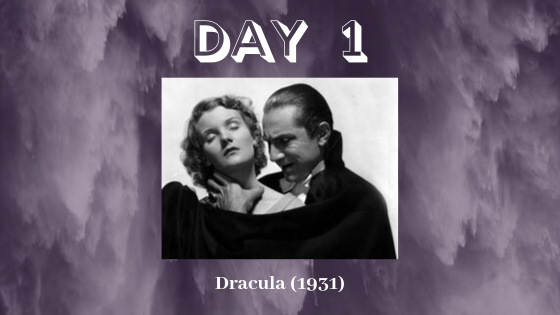
The first supernatural drama of the sound era, DRACULA was unleashed by Universal on Valentine’s Day 1931 with the tag line “The Strangest Love Story Ever Told,” perhaps signalling the studio’s unease at peddling such a bloodcurdling tale to a nation in the grips of the great depression. They need not have worried. The film provided a kind of rich Gothic escapism, paving the way for a whole cycle of 30s atmospheric chillers made with artistry and care that drew healthy box office and crowned Universal the king of horror. 

An adaptation of Bram Stoker’s 1887 classic, DRACULA also had its roots in a successful stage version, from which the play’s star, Bela Lugosi, was recruited to play the lead. The familiar tale tells of the vampire king’s migration from his native Transylvania … an exotic locale seen to great effect in one of the most eerie opening sequences of any horror film … to London’s teeming metropolis.

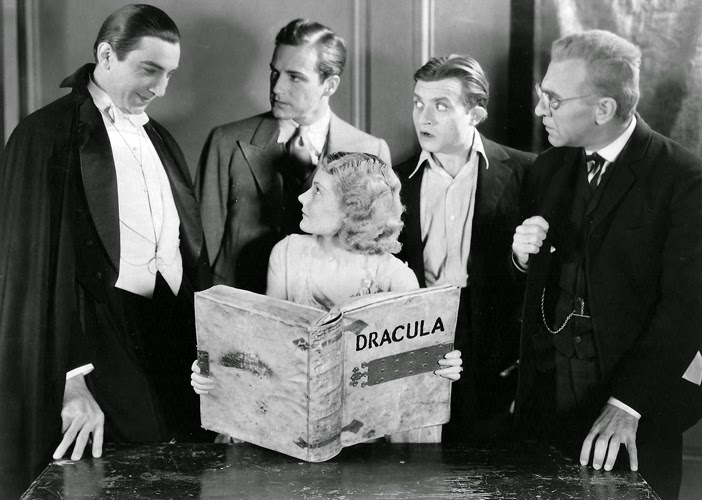
The cast of DRACULA: Bela Lugosi, David Manners, Dwight Frye, Edward Van Sloan and Helen Chandler.

The Count insinuates himself into the company of a group of unsuspecting Londoners, including the wise and virtuous Mina and her perhaps less wise best friend Lucy, who thrills to Dracula’s grand manner and exotic accent.

Lucy is attacked, dies and is resurrected as a vampire herself only to end up on the fatal end of a stake driven into her heart by intrepid and learned expert on the supernatural, Dr. Van Helsing, in a sequence that should have been a horror highlight but takes place off screen. (The film is too reticent in many places, conveying important plot points second hand through dialogue, when we would much rather have seen them directly.) 

Dracula sets his sites on Mina, who is defended by her boyish fiance, Jonathan, sanitarium director Dr. Seward, and Van Helsing, who warns his friends, “The strength of the vampire is that people will not believe in him.” In the end, Van Helsing and Co. track Dracula to his London hideout and good prevails.

HIGH POINTS

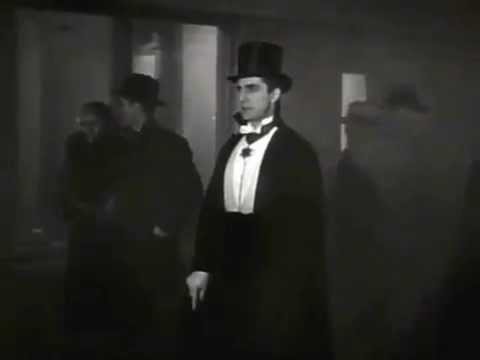
The film offers a classic performance by Lugosi himself, whose authentic accent, strange bearing and bizarre, halting cadences (“I never drink … wine.”) contribute to an unforgettable portrait of evil. I remember being particularly perturbed at the disembodied way Dracula drifts through a London street scene, before settling on a poor flower girl for an evening bite. He conveys the aspect of someone controlled from afar, perhaps an expression of how Dracula is held in thrall to a greater infernal power.  I’ve never seen any other actor in the part hint at this particularly eerie quality.

And while no more than a drop of blood is scene in the film, Lugosi achieves a heightened sense of horror through body language — he’s like a stylized vulture in a bedroom scene as he descends upon his victim –and facial expression. His striking mix of bestial hunger and a kind of pained self-revulsion while in the predatory moment is unforgettable.

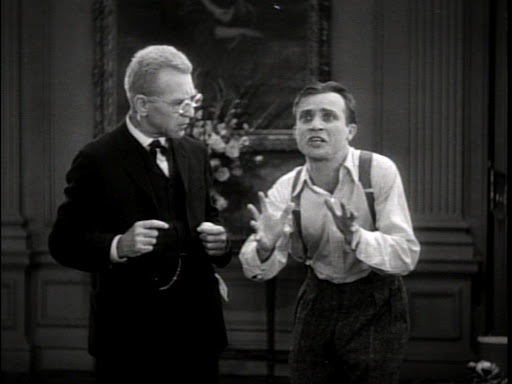
Also memorable are Van Sloan as the anti vampire crusader Van Helsing, and Dwight Frye (like Lugosi and Van Sloan, repeating his performance from the stage) as the pathetic fly-eating mental patient who has fallen under Dracula’s sway. Frye in particular has some wonderful moments, including his eerie demented laughter issuing from the hold of a deathship full of Dracula’s victims, and his “Rats, rats, rats” monologue in which he describes the vision of teeming life offered to him in return for faithful service to his master.

“A red mist spread over the lawn, coming on like a flame of fire … Rat, rats, rats. Thousand of them. Millions of them. All red blood.”

DRACULA is memorable for its elegant dialogue, these three tidbits all coming from the Count himself:

(hearing the howling of wolves) “Listen to them. The children of the night. What music they make.”

“I never drink … wine.”

“To die, to be really dead. That must be glorious … There are far worse things awaiting man than death.”

DEFICITS

The film is justly slated for being stagey, not taking advantage of the adventurous sweep of Stoker’s saga, which ends in a desperate race back to Dracula’s castle, a sequence which held great filmic possibilities but wasn’t used. And while I think Helen Chandler is fine as Mina, particularly in a scene in which her eyes light up with bloodlust as she battles to restrain herself from attacking her fiance’s handsome throat, I think David Manners is stiff and awkward as her reliable lover. Comic relief provided by a cockney sanitarium attendant mostly falls flat today.

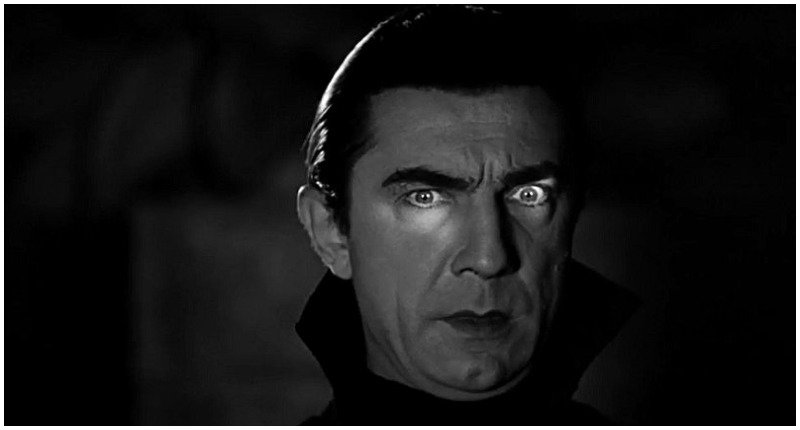
Director Todd Browning seems a bit sloppy in places, as when those little spotlights for Lugosi’s eyes don’t quite find their mark:

And if you’re really into the minutiae of classic films, check out this ten minute youtube exploration of why an ugly, jagged piece of cardboard can repeatedly be spotted in some of the bedroom scenes:

Caveats and technical deficiencies aside, DRACULA still has wonderful moments of poetic dread and horror, and remains a classic and standard bearer for all monster movies that followed in its wake.

UP NEXT:

“You have created a monster, and it will destroy you!”


During October: 31 Days of Classic Horror

Published September 30, 2019 by Philip Ivory

From my earliest years, horror films have had a profound influence on my creativity and my writing, and it’s time I paid them proper tribute for their artistry and lingering cultural impact.

Starting tomorrow and continuing each day for the entire month of October, I’ll highlight a favorite horror film, one that’s particularly influential in the field, or that impacted me in a profound way. The choices are subjective and entirely mine. The list will proceed chronologically from the dawn of sound films to the present day. 


Please check in and help me celebrate the cinema of the macabre all this month. Like Dr. Septimus Pretorius in BRIDE OF FRANKENSTEIN (1935), let’s hoist our glasses and toast the infernal, unholy, misbegotten and malign:

“To a new world of gods and monsters!”


Arizona Mystery Writers

Published April 19, 2018 by Philip Ivory

My thanks to my friends at Arizona Mystery Writers for inviting me on April 14 to deliver a reprise of the “Craft of Dark Fiction” lecture I gave for Writers Studio last December. My friend Bill Adams is a longtime member and accomplished writer who initially approached me about repeating this lecture for his group. My thanks to him and also to the group’s workshop chair Kay Lesh who made the arrangements with me.  Thanks also to another good friend and outstanding writer, Alice Hatcher, for helping with the audiovisual aspect of my lecture.

The lunch was tasty, the meeting was fun and the group was attentive and appreciative. I was speaking about horror fiction, which often intersects with mystery, although the two genres can also seem like two very different worlds.

Just for fun, I created and handed out the flyer below, a personal list but one that name checks examples of short writing in the dark fiction field that have impressed and influenced me. Check it out.


The Horror! The Horror! The Craft of Writing Dark Fiction

Published November 29, 2017 by Philip Ivory

Calling all Tucson-area writers and devotees of the scary and macabre! Come out and hear me, Phil Ivory, deliver a special free lecture at 2:30 on December 9, 2017 at the Himmel Park Library here in Tucson. It’s part of the Writers Studio lecture series. It should be fun, inspirational and a little bit scary!

DESCRIPTION:

From William Faulkner to Shirley Jackson to Margaret Atwood, writers have achieved memorable effects by putting characters in extreme situations and evoking sensations of fear, dread, awe and horror. In this Writers Studio lecture, we’ll look at horror not as something confined to the macabre shelf but as an emotion that will add power and resonance to any material regardless of genre. We’ll talk about using description to evoke a dark and lingering mood. Crafting the best narrator to evoke singular emotional effects. Laying groundwork for readers to have a powerful emotional experience while never telling them what to feel.

So take a writing journey to the dark side, and come back stronger than you were before.


Hope to see you there on Dec. 9!

And while you’re at it, why not sign up for one of our upcoming Writers Studio Winter classes?  Show the world how scarily creative you really are.

Must-Read Horror

Published August 4, 2017 by Philip Ivory

For anyone interested in horror writing, this is a list published about a decade ago by the Horror Writers Association of must-reads in order to familiarize oneself with the genre. I must admit I have only read about a third of this list. It’s subjective, of course. I would definitely add Poe, Robert Louis Stevenson, Peter Straub and others. Shirley Jackson definitely belongs here, particularly and most egregiously since the list features only one woman, albeit in the most important, lead-off position. Hope this is stimulating, at least.

Twenty-One Horror Classics (list by Robert Weinberg*)
1. Frankenstein by Mary Wollstonecraft Shelley
2. Dracula by Bram Stoker
3. The Ghost Pirates by William Hope Hodgson
4. The Collected Ghost Stories of M.R. James
5. Burn, Witch, Burn! by A. Merrritt
6. To Walk the Night by William Sloane
7. The Dunwich Horror and Others by H. P. Lovecraft
8. Fear by L. Ron Hubbard
9. Darker than you Think by Jack Williamson
10. Conjure Wife by Fritz Leiber
11. I Am Legend by Richard Matheson
12. Rosemary’s Baby by Ira Levin
13. Richard Matheson: Collected Stories, Vols. I, II, III
14. Hell House by Richard Matheson
15. The October Country by Ray Bradbury
16. Something Wicked This Way Comes by Ray Bradbury
17. The Exorcist by William Peter Blatty
18. Falling Angel by William Hjortsberg
19. Salem’s Lot by Stephen King
20. The Stand by Stephen King
21. Watchers by Dean Koontz

*source: “On Writing Horror: A Handbook b The Horror Writers Association” 2007 Writer’s Digest Books

“The Yellow Man” featured in BwS Quarterly Review

Published June 19, 2016 by Philip Ivory

I’d like to offer a warm word of thanks to the very civilized folks at online literary journal “Bewildering Stories.” They’ve been friendly and communicative with me since generously agreeing to publish my very long story, “The Yellow Man.”

halflogo

On top of that, their panel of review editors have granted me the further honor of including “The Yellow Man” in the latest quarterly edition of “Bewildering Stories,” their second such installment for 2016. Check it out:  Bewildering Stories’ Second Quarterly Review of 2016.

If you haven’t read “The Yellow Man” yet, please do so, and let me know what you think. If you have read it, now’s your chance to enjoy some of the other eclectic offerings at “Bewildering Stories.”

My Novelette Online: “The Yellow Man”

Published May 29, 2016 by Philip Ivory

IMG_2773 - Yellow Man - Copy (3)

From “The Yellow Man” by Philip Ivory:
“All you have to do is lift up that circle in the middle of the floor. Do you see it? And then go down there, under the floor, and get something. You’ll know it when you see it.”
Indeed, there was a circle in the concrete of the floor, about the size and shape of a manhole, and it seemed to be moving slightly.
That wasn’t right.
“No,” said Allan.
His heart was racing. Something about the circle made him uneasy. All his instincts told him to stay clear of it. When he tried to understand why, it just made the fear worse.
“You have to,” said the Yellow Man. “Or things will never get better.”

My first published novelette, “The Yellow Man,” is now available courtesy of the venerable online journal, “Bewildering Stories.”  CLICK HERE to read it now. (Because of its length, the story’s been broken, like a dark wizard’s soul, into seven horcrux-like parts,  all of which are now available to read.)

halflogo

“The Yellow Man” is a puzzle box of a tale, dealing with  childhood loneliness, identity and the shadow world between life and death. You may find it a bit sad and scary — but perhaps also touching and surprising.

For those interested in such distinctions, a novelette  — something  more than a story and something less than a novella — is a piece of fiction landing somewhere between 7,500 words to 17,500 words.

This is by far the longest piece I’ve had published yet. I’ve written one other novelette, yet unpublished, that’s about the same length as this one. And I presently have a novel in the works, but it will be a while before that one’s ready for public consumption.

“The Yellow Man” began last year in my advanced class at Writers Studio Tucson. My thanks to WS teacher Renee Bibby and my fellow class members for their encouragement and feedback, which were essential to this tale’s development.

“Bewildering Stories,” which features quite a dazzling smorgasbord of prose and poetry that you really should check out, has also posted an author profile about me. CLICK HERE to see it.

Please read “The Yellow Man,” and post your reactions here on the blog. Your feedback means everything to me. 

Thanks for reading!